
高研院简介

About CIGDS

Chenghai Institute of Global Development and Security (CIGDS)

Chenghai Institute of Global Development and Security (hereinafter referred to as "Chenghai Institute") was established through a generous donation from Mr. Ye Chenghai, an alumnus of the School of International Studies at Renmin University of China. It is a research institute for grand strategic studies grounded in rigorous academic inquiry. As a high-level, intellectually driven, and internationally oriented institute, its mission is to generate original ideas and conduct research on grand strategies that integrate development and security, as well as on major intellectual explorations into the advancement of human civilization. The Institute is committed to promoting China's global identity and its evolving role in the international order. It aims to deepen understanding of the development-security nexus and contribute to the progress of global civilization.

The Institute organizes several flagship academic events, including the annual Forum on China and the World Order, Tongzhou Global Development Forum, and the China Forum on International Affairs. It also hosts high-level dialogues with world-renowned scholars such as Professor Jeffrey Sachs and Professor Arne Westad. The Institute sponsors research on grand strategy and applied history, supporting both major projects and emerging scholars. It serves as a vibrant platform for research and dialogue between Chinese and international academics. In addition, the lnstitute confers awards in the fields of Historical Political Science and World Politics, encouraging innovation and excellence in these disciplines. Located in Zhongguancun, Haidian District, Beijing, the Institute stands at the heart of China's academic and technological hub.

The Communist Party of China has reorganized China and implemented an industrialization strategy, for the first time changing the world order through peaceful development rather than war and plunder. This has brought about unprecedented changes in the world unseen in a century, propelling human society into a new form of human civilization distinct from the Western-dominated model and deeply rooted in Chinese civilizational heritage. China's Global Development Initiative advocates common prosperity for all nations, rather than a beggar-thy-neighbor approach among countries; the Global Security Initiative champions common security, rather than zero-sum games; and the Global Civilization Initiative promotes mutual learning among civilizations, rather than a "clash of civilizations." These initiatives outline the embryonic form of a world order under this new human civilization.

However, China's current "soft power"—its international discourse power to communicate its national strength and its ability to set international agendas urgently needs improvement. This is where academic institutions like the School of International Studies at Renmin University of China must play their due role. The Historical Political Science and World Political Science proposed and advanced by the School are unique disciplinary concepts with the nature of political theory and ideological connotations, serving as the intellectual and disciplinary foundation for building a "think tank" that produces ideological products. The Institute will surely demonstrate China's intellectual influence and leadership.
The Chenghai Institute of Global Development and Security (CIGDS) was established through a generous donation from Mr. Ye Chenghai, an alumnus of the School of International Studies at Renmin University of China. It is a research institute for grand strategic studies grounded in rigorous academic inquiry. As a high-end intellectual and international research institute, the Institute is committed to providing intellectual products, conducting research on the grand strategies of coordinating development and security urgently needed by the country, and the new forms of human civilization. It seeks to elaborate on China's "global" identity and the resulting transformation of the world order. Based on an autonomous political science knowledge system, it aims to better study the relationship between development and security and help China lead the direction of world civilizational progress.

Management Team

Director of Strategic Development Committee

Zhang Donggang, Ye Chenghai

Chair of Academic Committee

Lin Shangli

Director-General

Yang Guangbin

Deputy Director-General

Di Dongsheng

Secretary-General of Academic Affairs

Wu Di

Message from the Director-General

The Chenghai Institute of Global Development and Security at Renmin University of China (hereinafter referred to as the "Chenghai Institute") is a research institute for grand strategic studies grounded in rigorous academic inquiry. The combination of disciplinary development and strategic research stems from the fact that Chinese social sciences rooted in political science are not yet mature, and an autonomous knowledge system has not been fully established. Disciplines serve as a crucial foundation for the professionalism and credibility of strategic research.

Both Historical Political Science and World Political Science, which we promote, are disciplinary concepts of methodological nature dedicated to constructing "Chineseness". When the approach to observing issues changes, so does the understanding of world politics. For example, how should we perceive a world that appears to be a blend of turmoil and transformation? Based on Historical Political Science and World Political Science, the great rejuvenation of the Chinese nation is undoubtedly the most significant event of our era. With this recognition, the understanding of the trajectory of world politics and the future form of human civilization transcends existing frameworks. Therefore, promoting disciplinary development constitutes an essential mission of the Chenghai Institute.

The Chenghai Institute will also become an academic center for the study of China and the world order. China's scale and civilizational attributes determine that its rejuvenation will inevitably bring about unprecedented changes in the world order over the past century. This will be a major transformation of the world order, and the relationship between "new players" and established powers—namely, the relationship between China and the world order—will be the most challenging strategic agenda of our time. To better understand this fundamental agenda, it cannot be merely defined as an "international issue". In fact, what "China" is and what "the world" is are basic questions of political science theory and World Political Science that need to be studied from scratch.

To achieve the above goals, we will build the Chenghai Institute into an open academic platform, welcoming scholars to visit and publish their works here. We will also promote our academic outputs through various forms of publications.

Finally (in fact, first and foremost), please allow me to express my heartfelt gratitude with utmost respect to Mr. Ye Chenghai and his family. Their sincerity, kindness, vision, and trust have enabled the establishment of the Chenghai Institute through their donation, allowing our ideal model of organized academic research to be realized and turning many ideas into intellectual products. Behind the establishment of the Chenghai Institute lies a touching story of keeping promises. In October 2017, alumnus Ye Chenghai donated 150 million yuan to Renmin University. In the summer of 2018, at the Diaoyutai State Guesthouse, he said to us that if the School of Political Science at Renmin University achieved results, he would "donate another 100 million yuan". Over the years, we have indeed achieved results, and alumnus Ye Chenghai has honored his promise without fail! The value of this institute is not personal, nor is it merely for a group of people; practice has proven that it will also belong to the nation.

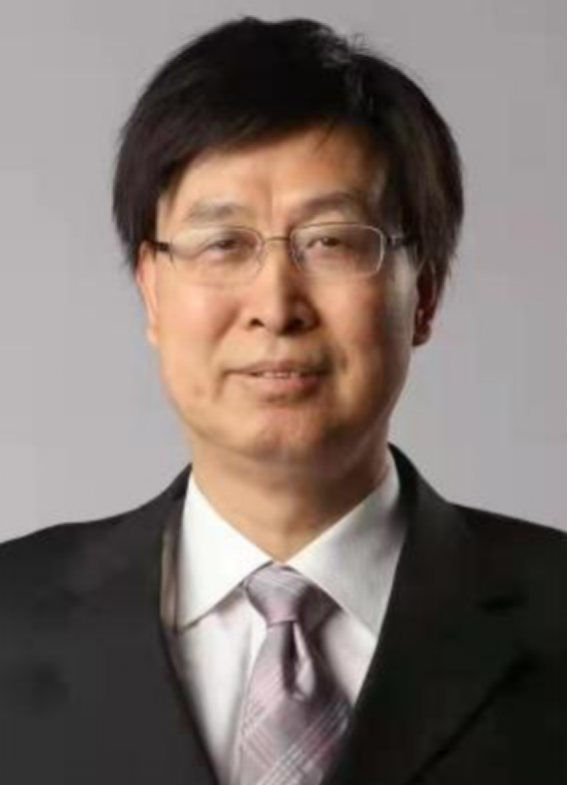
Yang Guangbin

Director-General of Chenghai Institute of Global Development and Security

Member of the 13th and 14th National Committee of the Chinese People’s Political Consultative Conference (CPPCC) and a Committee Member on Foreign Affairs, National Grade I Professor, Professor of Political Science and Former Dean of the School of International Studies (2017.6-2026.9) at Renmin University of China. He is the Distinguished Professor of the Recruitment Program of Experts of the Ministry of Education (2009), Secretary-General of the Political Science Discipline Appraisal Group of the 8th Academic Degrees Committee of the State Council, Convener of the Political Science Discipline Appraisal Group of the 9th Academic Degrees Committee of the State Council, Vice-President of Chinese Society of World Political Studies, Former Vice Chair of the Teaching Advisory Committee for Political Science Programs of Higher Education Institutions under the Ministry of Education, and Former Vice-Chairman of Chinese Political Science Association.

Professor Yang is recognized as one of the most influential scholars in Chinese political science and the broader social sciences. His studies focus on Political Theory and Methods, World Politics, Chinese Politics, and State Governance. He reconceptualized “history” not merely as a methodological tool but as an ontological category, proposed the epistemological logic of historical political science, and identified the epistemic logic of social science knowledge production. He has sought to extend International Relations theory to the broader disciplinary system of World Politics and advances an analytical framework based on China’s Tianxia worldview and Marx’s theory of world history. His research agenda for Chinese political science has also attracted global attention. Chinese Political Science Review published a special issue entitled “Guangbin Yang and New Agenda of Chinese Political Science”—the first English-language international journal to dedicate an issue to a Chinese scholar. His scholarly research has exerted political and social impacts, valued by high-level policymakers. Professor Yang’s major works include Historical Politics: A Paradigm Revolution in Chinese Political Studies, The Concept of Politics: An Epistemological Principle of Historical Politics, World Political Theory (awarded the 9th Higher Education Outstanding Research Achievement Award by the Ministry of Education), A History of World Politics (three volumes), Chinese Political Epistemology, Democracy in Idea and Practice, Delimiting Democracy, The State and Institutions amid Political Transition, and State Power in China’s Economic Transition. His major textbooks include Political Science: Introduction and An Introduction to Contemporary China’s Government and Politics (the 2nd edition awarded the 2nd Prize of National Excellent Textbooks). He is the editor-in-chief of the four-volume work Modern Transformation of China’s Traditional Political Civilization, which is forthcoming. Many of his books have been translated into English, German, Japanese, Russian and Indonesian. Chinese Political Epistemology is being translated into Spanish for publication.

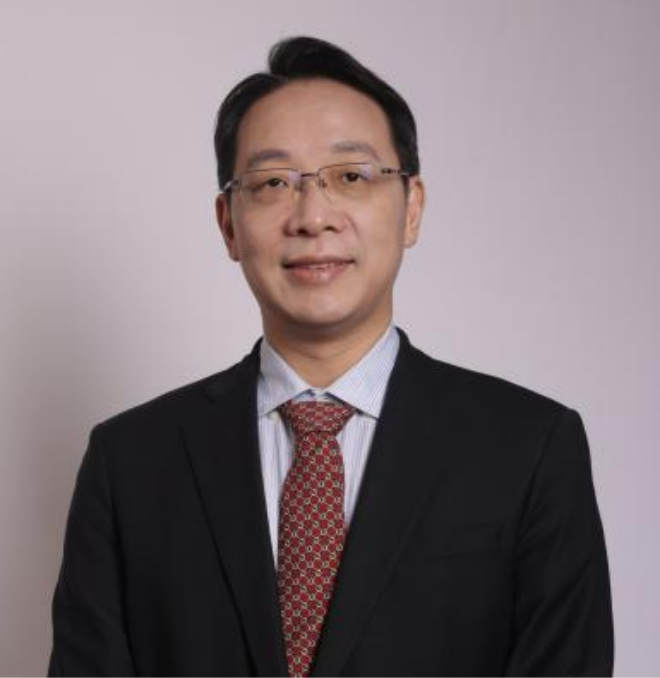
Di Dongsheng

Deputy Director-General of Chenghai Institute of Global Development and Security

Professor of International Political Economy, Dean of the School of Global and Area Studies, Associate Dean of of the School of International Studies, and Director of the Centre for European Studies, Renmin University of China. He was the member of the First Discipline Appraisal Group for Area and Country Studies under the Academic Degrees Committee of the State Council. As the Executive Dean of the Joint Institute for European Studies under the Ministry of Education and the Vice Chairman of National Association of Emerging Economy Studies, he is the Principal Investigator of a Major Project funded by the National Social Science Fund of China and has been a visiting scholar and short-term faculty member at multiple universities in Europe and North America.

Professor of International Political Economy, Dean of the School of Global and Area Studies, Associate Dean of of the School of International Studies, and Director of the Centre for European Studies, Renmin University of China. He was the member of the First Discipline Appraisal Group for Area and Country Studies under the Academic Degrees Committee of the State Council. As the Executive Dean of the Joint Institute for European Studies under the Ministry of Education and the Vice Chairman of National Association of Emerging Economy Studies, he is the Principal Investigator of a Major Project funded by the National Social Science Fund of China and has been a visiting scholar and short-term faculty member at multiple universities in Europe and North America.