
News & Events
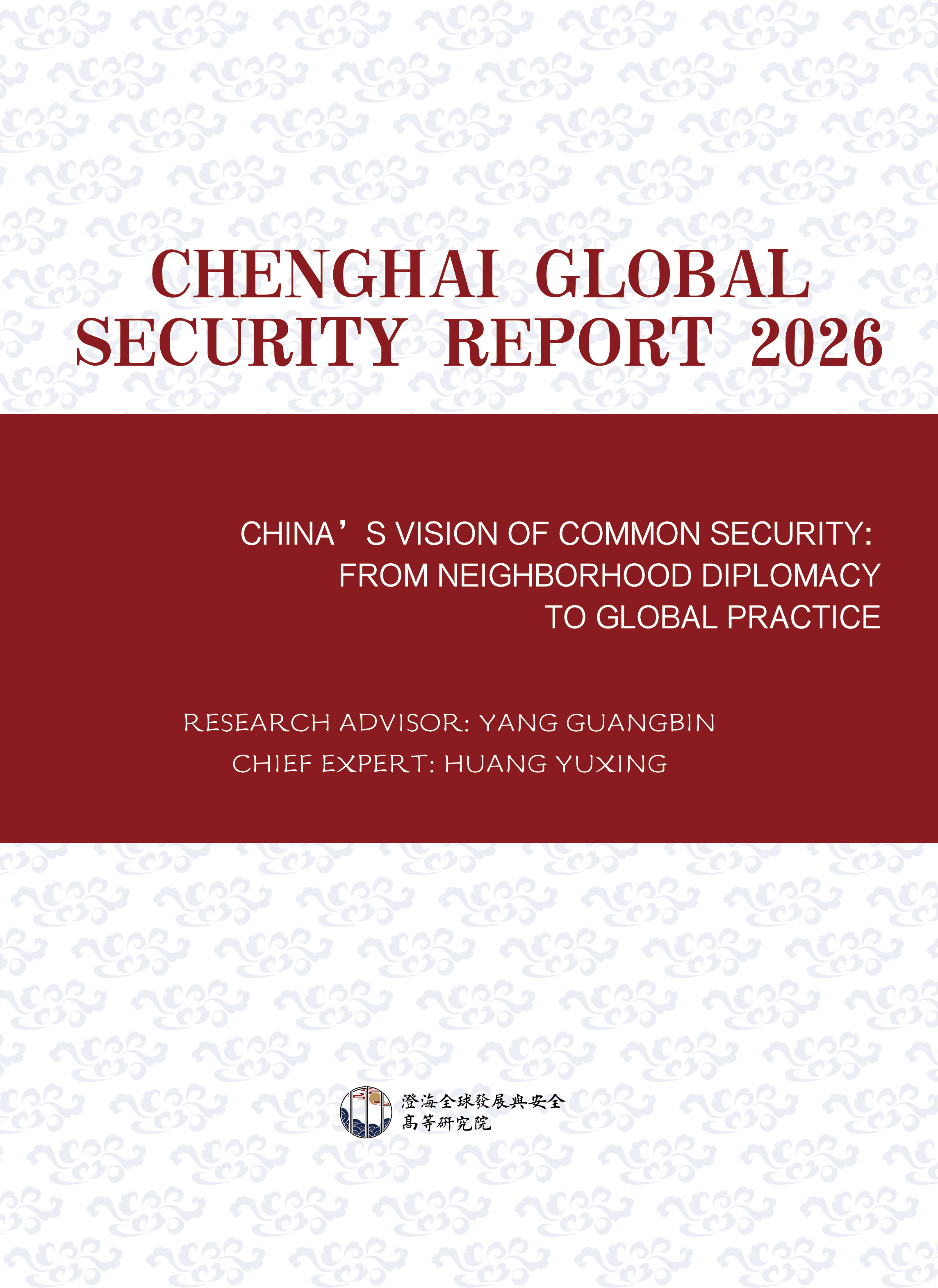
Seminar | Chenghai Global Security Report 2026:China's Vision of Common Security: From Neighborhood Diplomacy to Global Practice
On Oct. 11, 2026, the Parallel Forum Ⅶ of the Tongzhou Global Development Forum, themed “China’s Vision of Common Security: From Neighborhood Diplomacy to Global Practice”, hosted by Chenghai Institute of Global Development and Security, was held at Renmin university of China (Zhongguancun Campus). Huang Yuxing, Director of the Research Center for World Politics at Chenghai Institute and Professor at the School of International Studies, Renmin University of China, presented Chenghai Global Security Report 2026 :China’s Vision of Common Security: From Neighborhood Diplomacy to Global Practice. Scholars from the Party School of the CPC Central Committee (National Academy of Governance), Chinese Academy of Social Sciences, Peking University, Tsinghua University, Fudan University and Renmin University of China conducted in-depth discussions on such topics as the theoretical connotations of the Common Security Concept, its practice in peripheral security, and global security governance.
Seminar | The Second World Political Science Seminar
The Second World Political Science Seminar, hosted by Center for World Political Studies at Chenghai Institute of Global Development and Security, Renmin University of China, was successfully held. With "Reconstructing Paradigms in World Political Science" as its theme, the seminar received submissions from several dozen junior scholars and enrolled master's and doctoral candidates representing more than ten universities and institutions, including Renmin University of China, Peking University, Tsinghua University, the Party School of the Central Committee of the Communist Party of China, the University of Oxford, and Nanyang Technological University. Spanning two and a half days, the seminar assembled distinguished scholars in the field of world politics to deliberate upon cutting-edge academic developments.
Chenghai · Book Review | Paper Soldiers: How the Weaponization of the Dollar Changed the World Order
Call for Papers | The 9th Theory and Application Workshop on Historical Politics and Historical Institutionalism
Chenghai · Book Review | Artificial Intelligence and the New World Order
Call for Papers for the "7th Forum on the Knowledge System of Chinese Political Science"
Call for Papers for the 7th Workshop on "State and Governance in History"
Research Outputs
View More-
03 2026.04
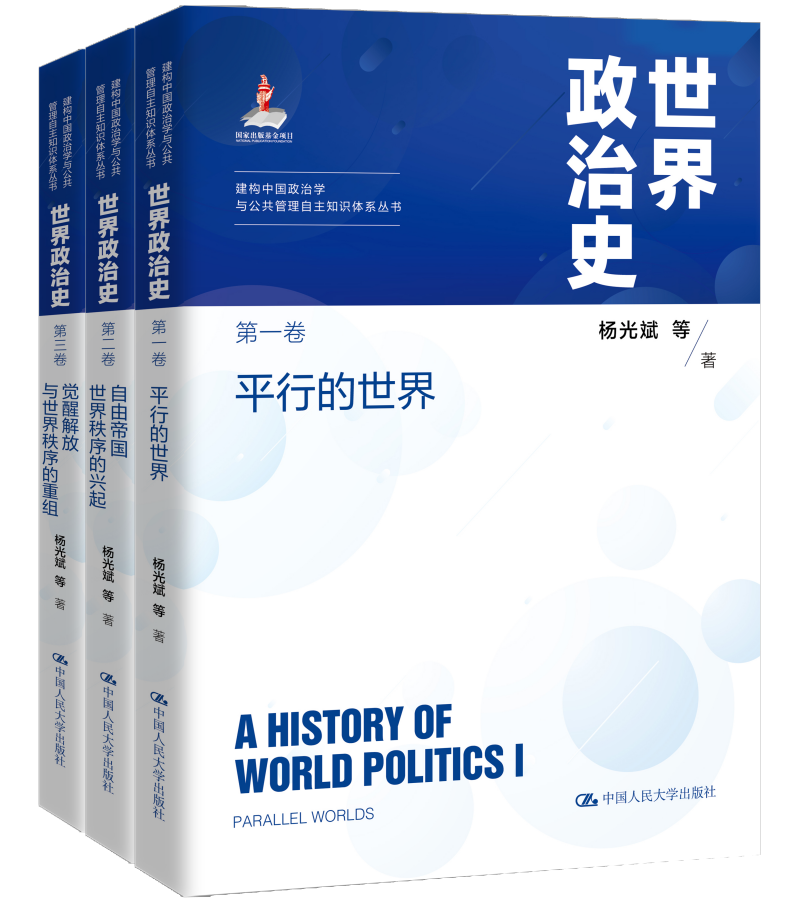
A History of World Politics (three volumes)
This book series endeavors to provide a "new historiography" for the study of international issues. The proposed "world politics" paradigm focuses on the institutional changes of states driven by the world market and political ideologies, as well as the world order shaped thereby. As a theory of world politics rooted in China's traditional political civilization, Marxist world history theory, and the practice of the Communist Party of China, it is of great significance for disenchanting Western-centric international relations studies and constructing an autonomous Chinese knowledge system in political science. Comprising three volumes and nineteen chapters, the book is structured as follows: Volume One mainly examines the diverse landscape of world order before the 16th century. Rejecting the narrow perspective of Eurocentrism, it places European civilization on an equal footing with Confucian, Indian, and Islamic civilizations, and analyzes how different civilizational forms constructed regional world orders. Volume Two spans the 16th century to the mid-20th century, recounting the rise of the Western world and the formation of the modern Western-dominated world order—a historical structure from which we have not yet emerged. Volume Three focuses on various "counter-movements" against the liberal imperial world order since the 20th century, including socialist movements, national liberation movements, and diverse forms of resistance within Western countries. The rejuvenation of China heralds the emergence of a new world order.
Date:2026.04.03
-
12 2026.01
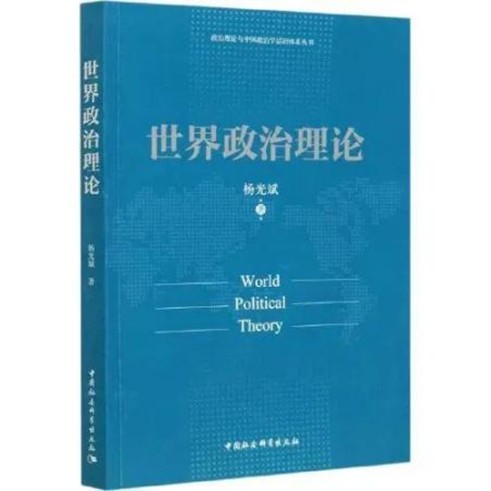
World Political Theory
World Political Theory was awarded the 9th Higher Education Outstanding Research Achievement Award (Humanities and Social Sciences) by the Ministry of Education.
Date:2026.01.12
-
12 2026.01
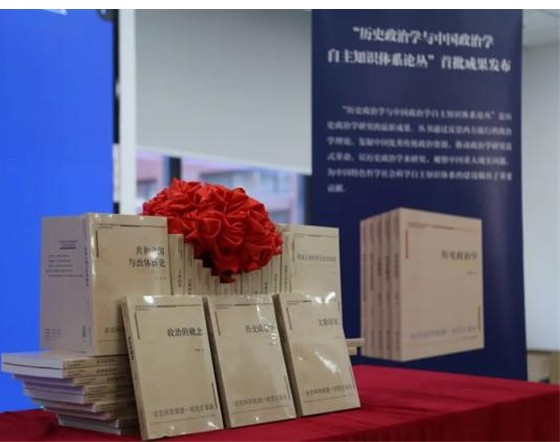
Series on the Autonomous Knowledge of Historical Political Science and Chinese Political Science
Academic research is a "project of patience". Since the establishment of the Center for Historical Political Science at the School of International Studies, Renmin University of China in 2019, this series represents the first batch of achievements under the Series on the Autonomous Knowledge of Historical Political Science and Chinese Political Science. It aims to make a substantive contribution in terms of methodology to the construction of an autonomous knowledge system for Chinese political science.
Date:2026.01.12
-
11 2025.12
2024 Annual Report on Anglophone Scholarship on Chinese Governance and Foreign Policy
To actively advance the construction of China's autonomous knowledge system of political science, and in particular to enhance the capacity of Chinese political science to engage in critical dialogue with mainstream Western political science theories, the Data Science Research Center (Arts Laboratory) of the School of International Studies at Renmin University of China launched and hosted the project 2024 Annual Report on Anglophone Scholarship on Chinese Governance and Foreign Policy (hereinafter referred to as the 2024 Annual Report), upon the initiative and support of Chenghai Institute of Global Development and Security at Renmin University of China.
The project team conducted a panoramic review of mainstream English-language academic journals spanning political science, sociology, economics, international relations, international security, and area studies (including China studies and Asian studies). It collected all academic papers published in these journals throughout 2024 that addressed issues related to China’s governance and diplomacy. In parallel, the team also compiled all academic monographs relevant to China’s governance and diplomacy published in 2024 by leading academic and commercial publishers in the English-speaking academic community.
Taking the collected English-language papers and monographs as its core data, the 2024 Annual Report systematically mapped the thematic distribution of English-language research on China's governance and diplomacy in 2024, along with the key findings and conclusions of such research. Subsequently, under the guidance of six full-time faculty members, ten master's and doctoral students specializing in Chinese politics, Chinese and foreign political systems, diplomacy, and international relations wrote literature reviews and commentaries on the most prominent research themes, thus completing the core content of the 2024 Annual Report.Date:2025.12.11
-
11 2025.12
Chenghai Global Security Report 2025: Assessment of China's Manufacturing Power Strategy and National Security
This report systematically interprets the dynamic correlation between China's progress toward becoming a manufacturing power and national security from three theoretical perspectives: the price revolution, weaponized interdependence, and the security dilemma.
The price revolution serves as the core theoretical perspective of this report. It refers to the significant price decline of manufactured goods led by China. At the domestic level, this transformation has enhanced national governance capacity, reduced the risk of China’s manufacturing sector being subject to "chokepoint" constraints, and effectively consolidated the foundation of national security. At the international level, this transformation has provided affordable manufactured goods to developing countries, strengthening their national security capabilities; meanwhile, it has also exacerbated the international security challenges faced by China.
Both weaponized interdependence and the security dilemma focus on the changes in the international security landscape triggered by China’s endeavor to build itself into a manufacturing power. The former means that the upgrading and rise of China’s manufacturing sector have reduced the risk of Western countries using interdependence as a "weapon" to suppress China, but at the same time, it has also made Western countries worry that China might "weaponize" their dependence on China, prompting them to intensify containment measures against China. The latter refers to the fact that China’s measures to strengthen its own security have aroused anxiety among Western countries, prompting them to introduce containment measures, which in turn have forced China to increase investment in independent innovation, further fueling the sense of insecurity among Western countries.Date:2025.12.11
-
11 2025.12
Chenghai Global Development Report 2025: Forging and Sustaining World Leadership: Degree of Organization in the Rise and Decline of Nations
The rise and fall of nations is a compulsory course that world-leading powers can never afford to neglect. It’s observed that the relations between major powers, while contested on a global scale, are ultimately decided by domestic governance.
Riding on the momentum of victory in the Cold War and coupled with the dominance of the new institutional economics over the world’s intellectual market, Western countries have habitually viewed the rise and fall of nations through an institutionalist lens and affixed ideological labels to the systems of various countries. However, this approach is incapable of solving the mystery of "social vitality" that dictates the rise and fall of nations.
Unlocking the "black box" of national rise and fall requires a new research unit. In contrast to the highly ideological institutionalist interpretations, the research unit of organizational degree derived from the organizationalist approach is far more capable of explaining the disparities in national development.
Organizational degree is an objective entity that exists at the "actual existence" level. In the history of nations, the evolution of human civilization has been a process advancing from non-organization to organization, from simple organization to complex organization, and from low organizational degree to high organizational degree. What Western political science refers to as modernization is essentially a high-organization process featuring the centralization of public authority from polycentrism to monocentrism, with nation-building serving as a key milestone in this modernization drive.
Therefore, the objective "organizationalism" aligns more closely with historical reality than the subjective "institutionalism", and organizational degree is naturally a research unit that allows for both qualitative and quantitative analysis. Based on this newly identified research unit of organizational degree, this study conducts macro-comparisons of grand history and macro-structures, and its core arguments are as follows.Date:2025.12.11
-
23 2026.01
Recovering the "Lost Decade"?--America's New Industrial Strategy and China's Status as the "World Factory"
In the first decade of the 21st century, U.S. manufacturing hegemony suffered its most severe decade-long decline, and cracks began to appear in the once-impregnable "steel fortress." During this "lost decade," the tide of globalization and manufacturing outsourcing battered the steel backbone of "Made in America." Meanwhile, emerging economies such as China, after joining the WTO, rapidly integrated into the international division of labor and took on massive industrial transfers from developed countries. The U.S. manufacturing hegemony, which had endured for over a century, faced severe challenges from China and showed strong signs of wavering. In 2010, China surpassed the United States to become the world's largest manufacturing nation. In the 200-year history of industrialization, this marked another watershed event, following the United States overtaking Britain in manufacturing output in 1890.
Date:2026.01.23
-
23 2026.01
The Underlying Logic of Divergent U.S.-China Strategic Perceptions
President Xi Jinping has pointed out that the issue of strategic perception is always the first button that must be fastened correctly in China‑US relations. This underscores the paramount importance of strategic perception for the bilateral relationship. As the saying goes, "Know yourself and know your enemy, and you will win every battle." In retrospect, the U.S. "engagement" strategy toward China was in fact built on a misperception of China's politics. Today, it is imperative for the Chinese side to gain a clear understanding of Western politics, especially that of the United States. A sound grasp of each other's political systems not only helps to understand mutual strategic perceptions but also clarifies certain judgments concerning China‑US relations.
From the perspective of historical political science, China's and the United States' strategic perceptions of each other are both rooted in their respective political outlooks and their understandings of "international relations" as external politics. These political outlooks, in turn, directly stem from their historically distinct trajectories.Date:2026.01.23
-
11 2025.12
From Real Economy to Virtual Economy: The Decline of Great Powers
Mainstream explanations for the rise and fall of great powers all suffer from certain limitations. From the perspective of global politics, this study adopts a long historical and comparative case study approach and finds that, in the history of capitalism since the rise of the West, cyclical hegemonic decline has often been triggered by the economy's shift from real to virtual sectors. The structural root of this shift lies in the disembedding of capital power, which eventually leads to the capture of political power.
Date:2025.12.11


Viewpoints
View More
-
01
2026-11
澄海全球 · 观点 | 以首个五年规划引领香港高质量发展
2026年9月16日,《香港特别行政区经济和社会发展第一个五年规划(2026—2030年)》正式公布。这是香港回归以来,首次对经济和社会发展进行整体性顶层设计。规划立足香港本地实际,主动对接国家“十五五”规划,围绕经济发展、民生改善、科创转型、区域协同等领域发展作出系统部署,为香港更好融入和服务国家发展大局、推动经济社会高质量发展指明实践路径。
-
01
2026-10
澄海全球 · 观点 | 党的治国理政创新理论蕴含的新政治学原理
党的治国理政创新理论蕴含的新政治学原理亟待提炼和阐发。现代政治学原理的元国家理论是基于欧洲民族国家历史而建构的主权、政府、人口、领土“国家要素说”,但是它既无法解释中国式“党和国家领导体制”的事实,在理论上也没有回答主权是如何转化为国家权力的。中国共产党作为领导型政党的革命建国(创制主权)、组织政权(政府)以及“中国之治”的持久经验表明,领导型政党是内生性的国家要素,这个重大发现为“党的全面领导”“党的领导是中国特色社会主义最本质的特征”等重大政治命题提供了根本依据。领导权是人民主权转换为国家权力的关键一环,领导型政党第一次解决了公共性权力私有化的千年难题,使得公共性权力掌握在公共性政治力量手里。在将党的治国理政创新理论转换为“原理”的双向运动中,勾画出了建构中国政治学自主知识体系的路线图。
-
30
2026-09
澄海全球 · 观点 | 共同构建“基于尊重、公平、对等的建设性战略稳定关系”
当地时间9月25日上午,国家主席习近平和夫人彭丽媛同美国总统特朗普和夫人梅拉尼娅在白宫举行茶叙。两国元首同意进一步丰富中美关系定位的内涵,共同构建“基于尊重、公平、对等的建设性战略稳定关系”,体现出中美的共同关切,举世瞩目。两国元首作为掌舵人,把握好方向、驾驭住大局,推动中美关系这艘大船平稳前行,对两国人民和世界来说都具有重要意义。
-
29
2026-09
澄海全球 · 观点 | 战后西方两次危机:从“制度内部的矛盾”到“制度本身的矛盾”
资本主义是一套世界性的组织体系,因此战后西方经历的两次危机——20世纪70年代的滞胀危机与2008年以来的金融—治理危机——都不能仅仅在单一民族国家的框架内解释,而必须放在世界体系的整体变动中考察。