World Political Theory by Yang Guangbin was awarded the 9th Higher Education Outstanding Research Achievement Award (Humanities and Social Sciences) by the Ministry of Education.
This book is divided into nine chapters. Chapter 1 is a restatement of realist international political theory. Chapter 2 is a call for world politics. Chapter 3 is the world political system. Chapter 4 is the research paradigm of world politics. Chapter 5 is the "civilizational paradigm" and the thinking framework of world politics. Chapter 6 is political trends of thought: a research unit of world political change. Chapter 7 is the wave of democratization and the restructuring of world order. Chapter 8 is the wave of liberalization in world political change. Chapter 9 is the great transformation of world order and world political theory.
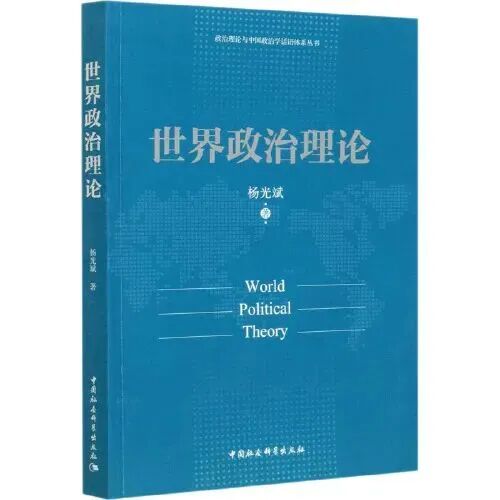
The book's main content:
In terms of argumentative logic, to construct the discipline of world politics, it is first necessary to recognize the dilemmas of realism, the theoretical starting point of international relations. World politics can be regarded as a transformed and upgraded discipline of international relations studies, and this book provides a preliminary discussion on various issues concerning the disciplinary construction of world politics.
It puts forward the concepts of the hierarchy of world politics and the diversity of research units. Among them, it systematically sorts out Wallerstein's theory of the capitalist world-economy based on the capitalist research unit; it reinterprets Huntington's civilizational paradigm and restates it, within the context of historical politics, as a thinking framework for world politics. While summarizing the achievements of other scholars, the author proposes observing the evolution of world politics through the research unit of political trends of thought, and examines the transformation of world politics and the restructuring of the world order from the two most influential political currents: democratization and liberalization. The author's propositions are grounded not only in historical research but also in responses to the real-world changes in world politics. The world order amid profound transformation calls for a theory of world politics.
The proposal of "world politics" in itself represents an integrated innovation through interdisciplinary integration, breaking away from the stereotypes of Western international relations theories. More importantly, it opens up a new approach in terms of research units. Temporally, technology, capital, and political trends have interconnected national politics and regional politics into a structural network of world politics. Yet only from the perspective of political trends can we grasp the essence of world politics and the truth of international relations. Taking "political trends" as its research unit, this book focuses on the domestic institutional changes induced by political trends and the great-power relations and world order shaped thereby. A theory of world politics defined by political trends will serve as the theoretical framework for the study of world political history as a "new historiography."
Since its publication, the book has been widely acclaimed and well-received by both academic circles and the general public. It was selected for the 2022 National Social Science Fund of China "Chinese Academic Works Translation Project" and named one of the "Most Popular Professional Books for Political Scientists in 2021". Several original articles of the book have been reprinted by journals including Chinese Social Sciences Digest, Information Center for Social Sciences of Renmin University of China, and Social Sciences Digest. This book represents a major achievement in the development of world politics studies and carries important value for the construction of an autonomous knowledge system of Chinese political science.
About the author:
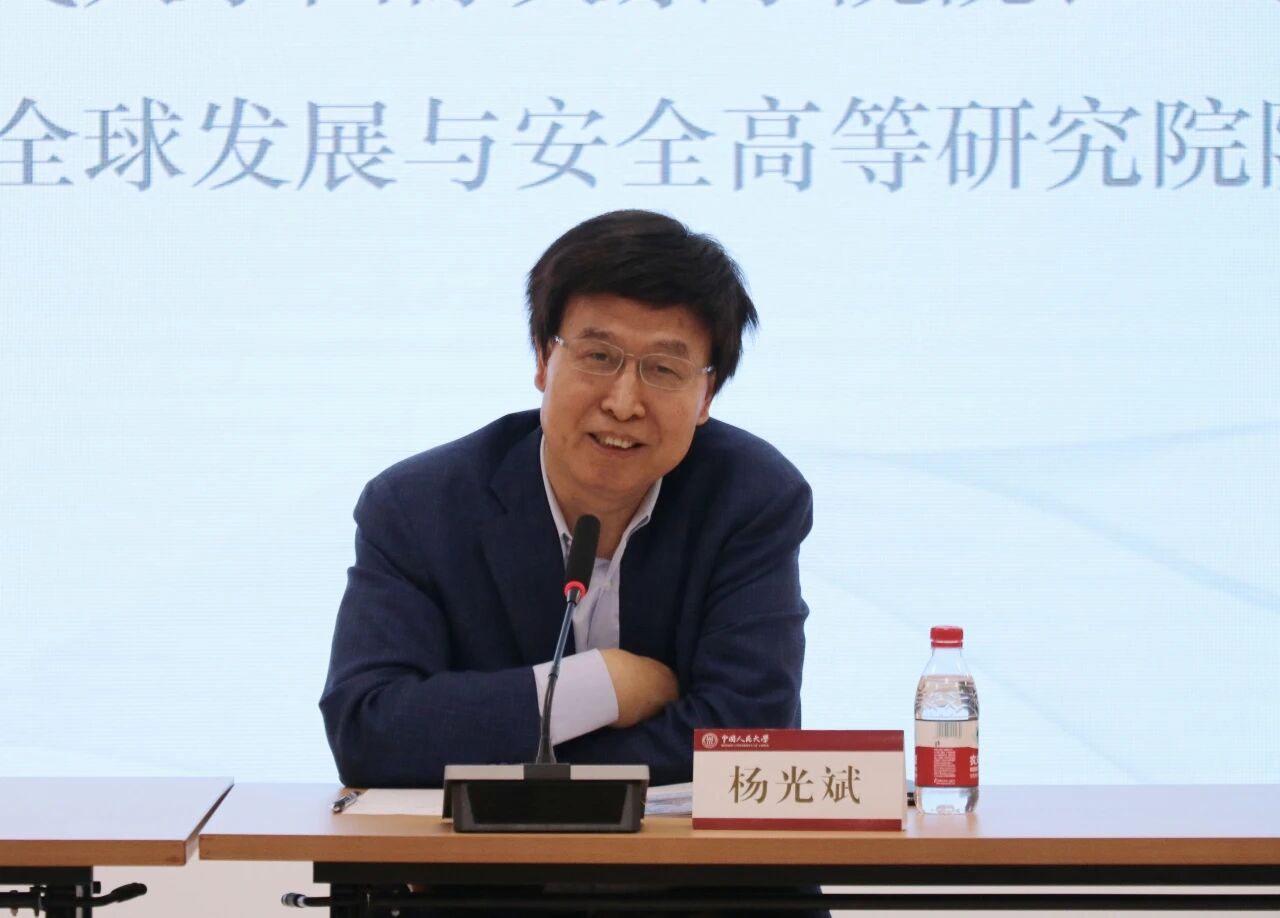
Yang Guangbin, Distinguished Professor of Renmin University of China, Dean of School of International Studies at Renmin University of China, and Chief Expert of Central Marxism Theoretical Research and Construction Project, was selected into the National High-Level Talent Program of Ministry of Education and as National Leading Talent in Philosophy and Social Sciences (2016). He is also the Chief Editor for Journal of State Governance Studies. His research covers political science theories and methods, comparative politics (world politics), contemporary Chinese government and politics, and China's domestic political economy and foreign relations. He is the author of 7 academic monographs and 3 research-oriented textbooks. He has published about 100 academic papers in Chinese and English, including two in Social Sciences in China, and nearly 100 commentaries on Chinese politics, world politics and political theory. Many of his theoretical research achievements have exerted considerable academic, political and social influence.