Modern scholars' generalizations and judgments regarding China's political system have been dominantly influenced by Western theories of democratic polity. As a long‑standing intellectual tradition in China, however, the theory of governing structure offers a substantial and reflective theoretical perspective for critical re‑examination.
This tradition underwent stages of inception, growth, maturation, and relative decline. From Jia Yi in the early Han Dynasty to the Collected Essays on Statecraft of the Qing Dynasty in the late Qing period, it profoundly shaped the ideology and institutional practice of the unified, prefecture‑and‑county state.
Its theoretical framework comprises three core elements: the way of governance, the methods of governance, and men of governance, from which diverse forms evolved. These reflect a practitioner‑centered perspective and give rise to typologies of governance systems, such as rule by men, rule by law, and rule by ritual.
Beyond popular formulations like "inner sageliness and outer kingship," the theory of governing structure identifies a systematic logic for understanding traditional order‑building. Meanwhile, it opens up a rich and more comprehensive constitutional resource for reflecting on the deficiencies of modern theories of polity.
As China advances toward modernization, there is an increasingly urgent need to positively address the critical task of grasping the inherent logic and characteristics of China's political development, and effectively linking its real‑world expressions with its long and rich traditions. This first requires precise and systematic intellectual sorting and theoretical refinement of the inherent pathways of China's political tradition.
As a core category of order in China's political‑academic tradition, the theory of governing structure has evolved for more than two thousand years and is closely bound up with the practical ordering of China's political society. Undoubtedly, this intellectual tradition carries special academic significance and practical value for the contemporary exploration of indigenous theoretical resources in political science and the social sciences at large, and for the formation of an effective discourse system rooted in Chinese tradition.
About the author:
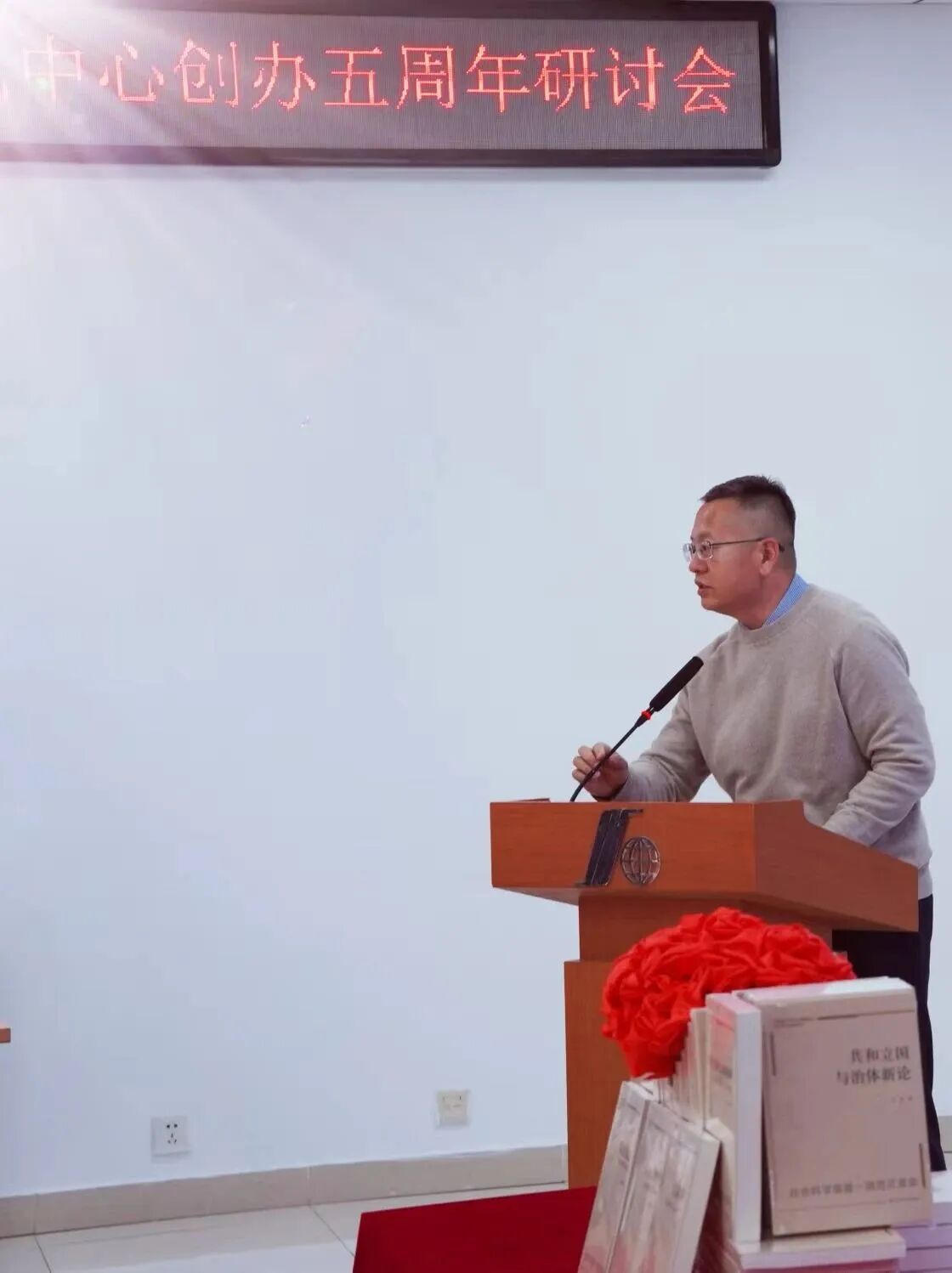
Ren Feng, Professor of Department of Political Science, School of International Studies at Renmin University of China. He received his academic training in history at Nankai University and the Hong Kong University of Science and Technology from 1994 to 2005. Since 2005, he has taught at the Department of Political Science, Nankai University and subsequently at Renmin University of China. His research specializes in Chinese political tradition and political theory. He is the author of three monographs:
Dao-Tong and Zhi-Ti: Civilizational Insights into Constitutional Dialogue (2014)
State-Founding Thinkers and the Revival of Governing Structure (2019)
Republican State-Building and New Theory of Governing Structure: A Study of Qian Mu’s Historical Political Science (2024)
His book State-Founding Thinkers and the Revival of Governing Structure won the First Prize of the 16th Beijing Outstanding Achievements in Philosophy and Social Sciences. He has published more than 60 academic articles in journals including Journal of Political Science, Studies in World Religions, and Social Sciences. He currently serves as Editor-in-Chief of Chinese Political Studies (collected series), academic editorial board member of Journal of the History of Political Thought and Tianfu New Idea, and Deputy Director of the Center for Historical Political Science. He has directed multiple projects funded by the National Social Science Fund of China.