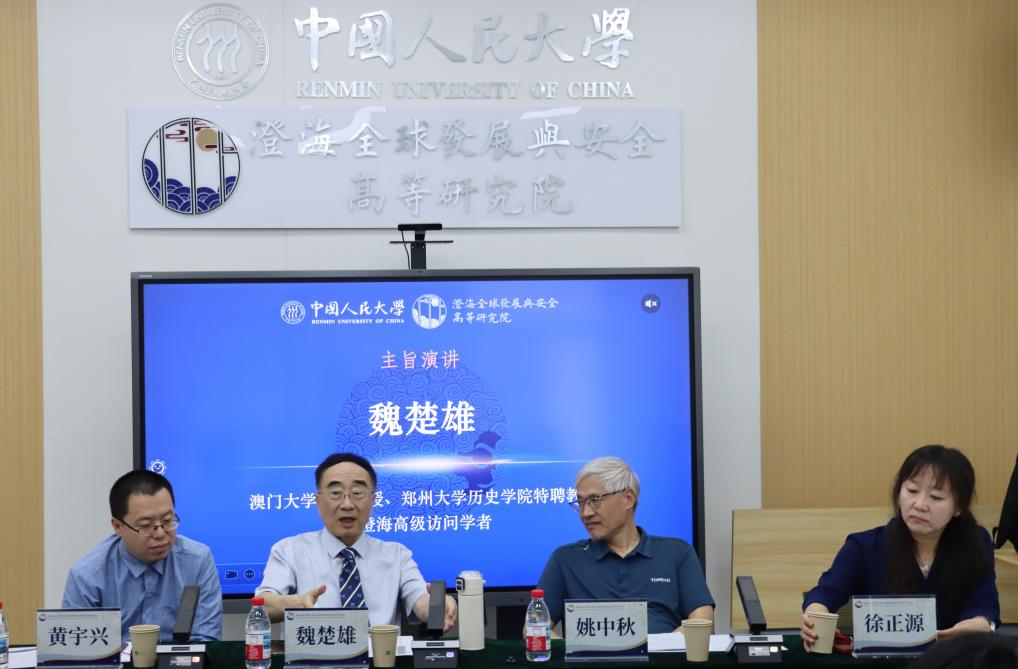
On June 24, 2026, The Lecture on Characteristics of Eastern and Western Civilizations and Their Implications for Diplomacy, hosted by School of International Relations at Renmin University of China and Chenghai Institute of Global Development and Security, was successfully held. Wei Chuxiong, Emeritus Professor of University of Macau and Chenghai Senior Visiting Scholar, was invited as the speaker of the lecture. Huang Yuxing, Professor of School of International Relations at Renmin University of China, moderated the lecture. Yao Zhongqiu, Professor of School of International Relations at Renmin University of China, and Xu Zhengyuan, Associate Professor of School of International Relations at Renmin University of China, participated as discussants.
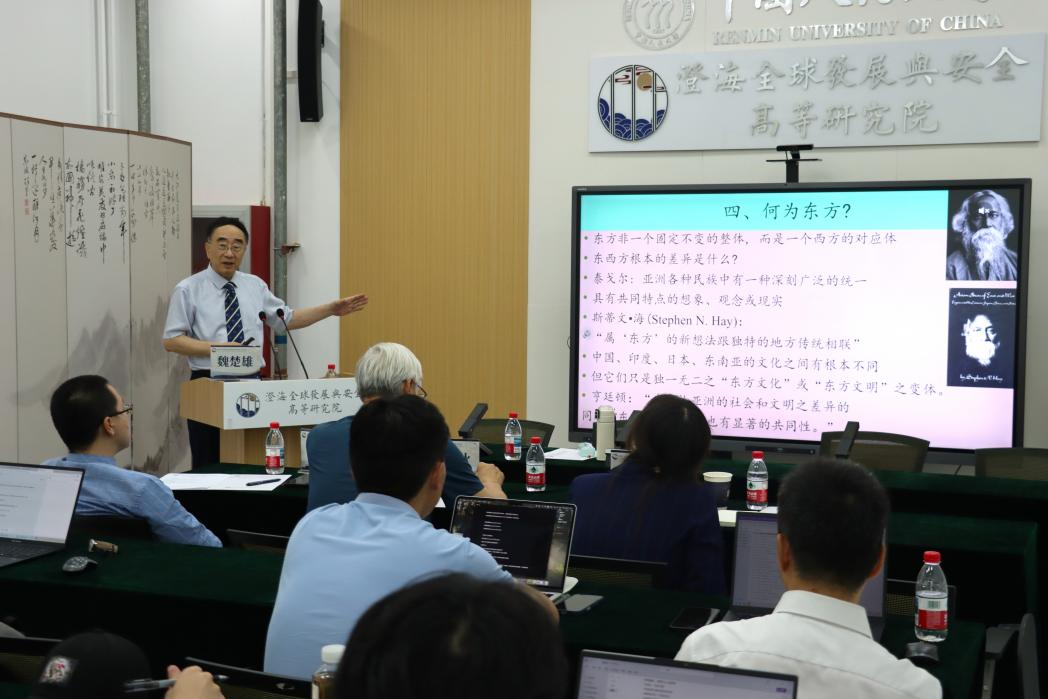
Professor Wei Chuxiong shared profound insights into whether there exists an essential divide between Eastern and Western civilizations, and how the underlying logic of civilizations shapes the global diplomatic order. He systematically analyzed the foundational logic of Eastern and Western civilizations as well as their impacts on diplomacy from three dimensions: the origin of the world, external perceptions, and diplomatic practice.
First, in terms of their outlooks on the origin of the world: Western civilization embraces binary opposition, whereas Eastern civilization advocates harmony amid diversity. As Professor Wei Chuxiong observed, Western civilization is rooted in a linear mode of binary oppositional thinking, which gives rise to individualism and an exclusive sense of civilizational superiority. By contrast, Eastern civilization adheres to the philosophy of pluralistic coexistence and the unity of opposites encapsulated in "harmony amid diversity", prioritizing moral edification over violent suppression.
Second, with regard to external perceptions: Western civilizations pursued overseas plunder, while Eastern civilizations embraced harmonious coexistence. Reviewing distinct phases of Western civilization, Professor Wei Chuxiong pointed out a grave fallacy embedded in Western logic: positioning itself at the apex of civilization and rationalizing colonial conduct under the pretext of civilizing backward peoples. Moral and institutional expositions in ancient Chinese classics embody the Eastern philosophy advocating harmonious coexistence among diverse civilizations and ethnic groups.
Third, in the realm of diplomatic practice: Western civilization upholds power-based partition, while Eastern civilization advocates universal fraternity under heaven. By comparing the Western Westphalian system with China's traditional Jifu (five-tier tributary) system, Professor Wei Chuxiong noted that Western diplomatic practices emerged from regional realities and center on sovereign competition for hegemony. In contrast, Eastern civilization pursues the vision of universal harmony and a unified world, an outlook inherently consistent with the contemporary concept of a community with a shared future for mankind.
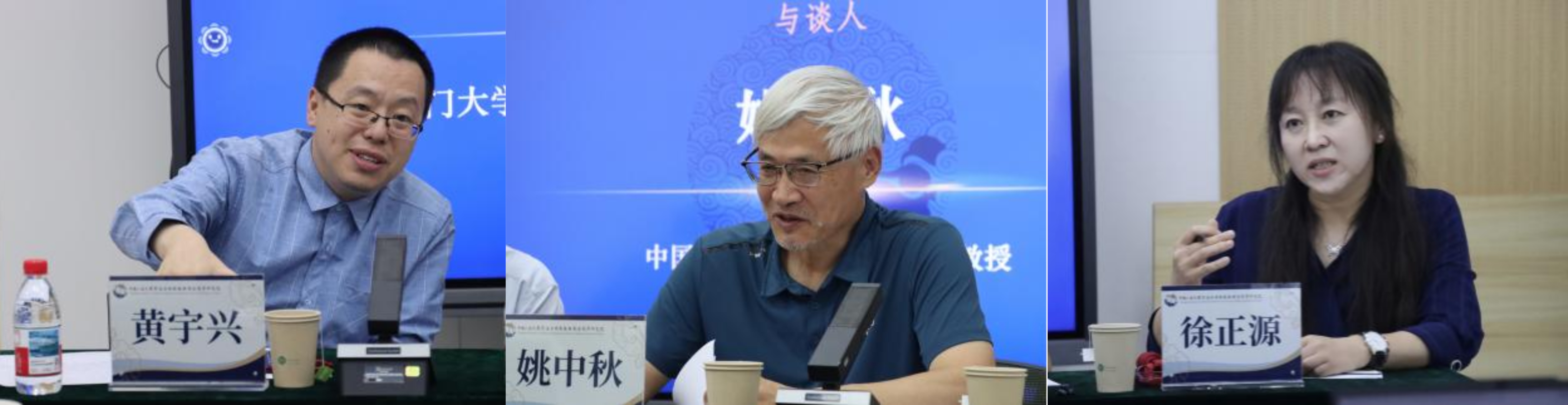
Following the presentation, Professor Yao Zhongqiu and Associate Professor Xu Zhengyuan delivered in-depth comments and held interactive discussions by drawing on historical contexts and real-world practices. Professor Wei Chuxiong responded point by point to their remarks and engaged in thorough exchanges with faculty and students present on topics including the prospects of China–U.S. relations, the construction of an East Asian Community, and the development of China's autonomous knowledge system.